

Babies do not follow a calendar. They follow their own timetable.
It is completely normal for one baby to roll at 4 months and another at 6 months. One may walk at 10 months; another at 15 months. Both can be healthy and develop well.
Milestone guides are designed to offer reassurance and spot patterns over time, not to make parents anxious. If your baby is slightly earlier or later than a monthly guide suggests, that is very often within the broad range of typical development.
There is no panic threshold for being “a few weeks behind.” What matters most is overall progress, steady growth, and your baby’s engagement with the world around them.
We will revisit this again at the end, but for now, take a breath.
In the UK, babies’ weight, length, and head circumference are plotted on UK-WHO growth charts. These charts help clinicians see whether your baby is following their own curve over time.
Rather than focusing on “average baby weight in the UK,” clinicians look at:
A baby on the 9th centile who consistently tracks along that line can be just as healthy as a baby on the 75th centile. It’s the direction and consistency that matter.
NHS guidance suggests that if there are no concerns:
Weighing more often is only helpful when there is a clinical reason. Numbers without context can create unnecessary worry.
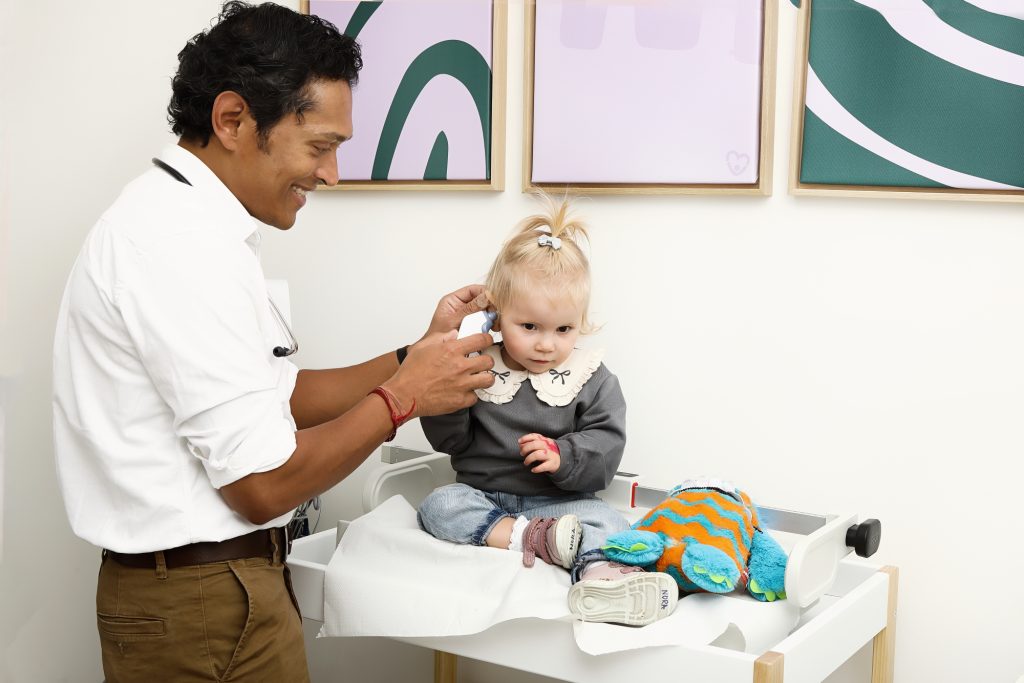
A weigh-in is useful when it answers a question, not simply to “check just in case.”
You might consider booking one if:
For families in North West London, quick access to a clinician can provide clarity without long waits.
At Kidswell Health, we run a weekly baby clinic that is completely free.
This clinic offers parents the opportunity to:
It is designed as a supportive space, not a rushed appointment. Many parents find that simply having time to ask questions in a calm environment makes a significant difference.
You can find details on our website at www.kidswellhealth.com
Below is a gentle guide to what commonly happens in Year One. Think of it as “things that often appear around this time,” not expectations.
WHO motor development data shows wide developmental windows for sitting, crawling, and walking; there is no single “correct” month.
Not all babies crawl traditionally, and that can still be normal.
It’s reasonable to seek advice if you notice:
These are not emergency signs in most cases, just reasons to have a conversation.
Sometimes milestone questions connect to other areas, such as:
At Kidswell Health, families can access:
The aim is joined-up care. If a baby needs more than reassurance, families can access coordinated support without navigating multiple systems alone.
We work alongside NHS services, not in opposition to them, offering additional access and time where helpful.

It is very easy to compare babies, especially in London parenting groups, baby classes, or family WhatsApp chats.
But development is not a competition.
If your baby is progressing, interacting, feeding, and gradually gaining weight, being “later” than another child is usually just variation.
Milestones are guides. Patterns matter more than dates. And small differences month to month are common.
There is no panic deadline in baby development.
If something truly needs attention, it will usually show up as a pattern, not a single missed month. If you are unsure, a calm check can bring clarity.
For families in North West London looking for reassurance, growth checks, or access to experienced clinicians, visit: www.kidswellhealth.com
Whether you attend our free weekly baby clinic or book a consultation, the goal is simple:
Support. Clarity. And confidence in your baby’s own timeline.

Gabriel Chain, M.B.B.S, B.S.c, FAAP, Board Certified in General Paediatrics from the American Board of Paediatrics.
Following graduation from University College London, Gabriel completed foundation medical training in Edinburgh at the Royal Hospital for Sick Kids and Royal Infirmary. He then completed the USMLE board exams and certification with the ECFMG before relocating to New Jersey, USA where he completed Paediatric Residency at The Children’s Hospital at Saint Peter’s University Hospital.
After residency, Gabriel began working at Attending/Consultant level for the Children’s Hospital of Philadelphia, primarily practising at Penn Medicine Princeton Medical Center. He works as a General Paediatrician “Hospitalist” and Paediatric ER physician. He now continues that role whilst also subspecialising in paediatric palliative care at Nemours Children’s hospital.

Stubbornness. Defiance. Attention-seeking. Giving in. These are the words that get attached to a child who won’t go to school…
It’s 11.04pm. Your four-year-old has been at the bedroom door seven times. You’ve done the water, the second wee, the…

Your son is nine. His best friend sat with someone else at lunch on Tuesday and he came home and…

Your child seems quieter than usual. They won’t eat lunch before school. They’re clinging to you at the classroom door…

If your baby develops a new rash, it can quickly become all you think about. Is it eczema? Heat rash?…

What has happened? There has been an outbreak of meningococcal meningitis in the Canterbury area of Kent. Health authorities have…